
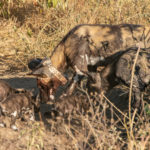
 Imagine a wild dog pack on your
doorstep
For the communities who live around the Serengeti National Park in Tanzania, this is their reality. Wild Dog packs have extensive ranges and more than half of the wild dog pack territories in the Serengeti range outside of the national park. As a result, there is inevitable human wild-dog conflict. The dogs target the communities’ livestock, and herders poison wild dogs in retaliation.
Schemes that compensate people for losses from wildlife have become widespread globally. However, research is showing that paying people to tolerate wildlife may not be the most effective or sustainable conservation strategy.
The Serengeti Wild Dog Conservation Project is run by a group of Tanzanian Researchers from the Tanzanian Wildlife Research Institute (TAWIRI) who work to mitigate human-wild dog conflict in a different way.
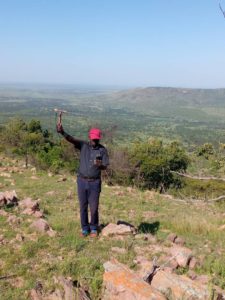
Each day the Wild Dog Trackers find the wild dog packs using GPS collars. They then send the dogs’ GPS locations to trained and appointed Wild Dog Guardians in the surrounding villages. The Guardians then let their villages know where the dogs are so they can avoid them. The team also run community awareness programmes in schools and villages, which help teach herding best practices. These efforts have reduced human-wild dog conflict in the research areas and are keeping wild dogs and communities safe.
Your safaris have helped our foundation to support the Serengeti Wild Dog Conservation Project for the past five years, and some of you have very kindly contributed in addition to this. We are currently helping to cover the salaries of four qualified wild dog trackers: Julieth Mwanga; Ernest Shukia; Anjela Mchamungo, and Neema Mollel, who work under project leaders Dr Ernest Mjingo (PhD) – Wildlife Veterinarian and Researcher and Dr Emmanuel Masenga (PhD) – Ecologist and Researcher.
The team monitors over 200 wild dogs and has ongoing research on wild dog populations genetics, competition patterns, and other large carnivore and survival mechanisms. They also do wild dog health assessments, all of which help ensure these wild dog populations’ future health. This is critical work as there are only approximately 6600 wild dogs left in the wild.
This is a project particularly close to RAS Partner Chris Rodger’s heart, and we want to thank all of you who have supported it!
Below are photos from some of their recent tracking sessions this year!


The People
The Process
The Journey
The Stories
The Foundation
Contact
North America:1-877-337-4176
International:+1-416-915-4145
- info@royalafrican.com
© 2026 Royal African Safaris
Design and Development by Focus Online